 Bernhard Haeupler

Algorithms and Theory
Researchers
Current Researchers



Sabbaticals & Visiting Faculty (Long-term and Frequent Visitors)
Visitors (43)
- Prof. Ellis Hershkowitz, Brown University
- Prof. Harald Raecke, Technical University of Munich
- Prof. Robert Tarjan, Princeton University
- Prof. Venkat Guruswami, Simons Institute and University of California, Berkeley
- Prof. Slobodan Mitrovic, UC Davis
- Prof. Adi Shamir, Weizmann Institute for Science
- Prof. Christoph Lenzen, CISPA
- Prof. Ohad Trabelsi, University of Haifa
- Prof. Thatchaphol Saranurak, University of Michigan
- Prof. Gregory Schwarzman, Japan Institute of Science and Technology
- Prof. CS Karthik, Rutgers University
- Prof. Jakub Radoszewski, University of Warsaw
- Christoph Grunau, Postdoc, ETH Zurich
- Sorrachai Yingchareonthawornchai, Postdoc, ETH Zurich
- Ce Jin, Postdoc, University of California, Berkeley
- Itai Boneh, Postdoc, Reichman University and University of Haifa
- Christian Lebeda, Postdoc, University of Montpellier
- Jacob Imola, Postdoc, University of Copenhagen
- Jad Silbak, Postdoc, Northeastern University Boston
- Antti Roeyskoe, PhD student, ETH Zurich
- Richard Hladik, PhD student, ETH Zurich
- Willem Fletcher, PhD student, Brown University
- Wen-Horng Sheu, PhD student, UC Davis
- Srikkanth Ramachandran, PhD student, UC Davis
- Benyu Wang, PhD student, University of Michigan
- Yaowei Long, PhD student, University of Michigan
- Mursalin Habib, PhD student, Rutgers University
- Adarsh Srinivasan, PhD student, Rutgers University
- Zohar Barak, PhD student, Tel Aviv University
- Anton Paramonov, PhD student, ETH Zurich
- Shengzhe Wang, PhD student, ETH Zurich
- Zhongtian He, PhD student, ETH Zurich
- Thiago Bergamaschi, PhD student, University of California, Berkeley
- Yonggang Jiang, PhD student, MPII
- Petr Chmel, PhD student, Charles University Prague
- Ron Safier, PhD student, Weizmann Institute for Science
- Omri Shmueli, PhD student, Tel Aviv University
- Tomas Domes, PhD student, Charles University Prague
- Nathan Wallheimer, PhD student, Weizmann Institute for Science
- Lukas Retschmeier, PhD student, University of Copenhagen
- Egor Gorbachev, PhD student, University of Saarland
- Ondrej Sladky, Master’s student, ETH Zurich
- Gal Rotem Porat, Master’s student, Weizman Institute for Science
Students (5)
- Kaloyan Tsvetkov (Explorer 2025)
- Boris Gachevski (SURF 2026)
- Harman Agrawal (SURF 2026)
- Rowan David Santos (SURF 2026)
- Pakapim Eua-anant (SURF 2026)
Alumni (7)
- Amir Abboud — Weizmann Institute for Science
- Václav Rozhoň — now Faculty at Charles University, Prague
- Jakub Tětek — now CTO at Stealth Start-up
- Seri Khoury — now Co-Founder at Stealth Start-up
- Nick Fischer — now Group Leader at MPII
- Tomasz Kociumaka — now Group Leader at MPII
- Shyan Akmal — now Postdoc at MPII
We are hiring!
We invite excellent faculty applicants of all ranks. This includes tenure-track faculty, as well as tenured faculty who are excited to co-lead, shape and grow the newly established Theory@INSAIT group.
Publications since 2025 (41)
Open Publication List
All Theory Publications since 2025
2026
- Reviving Thorup’s Shortcut Conjecture
Aaron Bernstein, Henry Fleischmann, Maximilian Probst Gutenberg, Bernhard Haeupler, Gary Hoppenworth, Yonggang Jiang, George Z. Li, Seth Pettie, Thatchaphol Saranurak, Leon Schiller
STOC 2026: ACM Symposium on Theory of Computing - Deterministic Negative-Weight Shortest Paths in Nearly Linear Time via Path Covers
Bernhard Haeupler, Yonggang Jiang, Thatchaphol Saranurak
STOC 2026: ACM Symposium on Theory of Computing - A Constant-Approximation Distance Labeling Scheme under Polynomially Many Edge Failures
Bernhard Haeupler, Yaowei Long, Antti Roeyskoe, Thatchaphol Saranurak
STOC 2026: ACM Symposium on Theory of Computing - DAG Projections: Reducing Distance and Flow Problems to DAGs
Bernhard Haeupler, Yonggang Jiang, Thatchaphol Saranurak
STOC 2026: ACM Symposium on Theory of Computing - Breaking Barriers for Distributed MIS by Faster Degree Reduction
Seri Khoury, Aaron Schild
STOC 2026: ACM Symposium on Theory of Computing - Tree-Like Shortcuttings of Trees
Hung Le, Lazar Milenkovic, Shay Solomon, Cuong Than
SoCG 2026: International Symposium on Computational Geometry - Euclidean Noncrossing Steiner Spanners of Nearly Optimal Sparsity
Sujoy Bhore, Sandor Kisfaludi-Bak, Lazar Milenkovic, Csaba D. Toth, Karol Wegrzycki, Sampson Wong
SoCG 2026: International Symposium on Computational Geometry - White-Box Adversarial Streaming Lower Bounds beyond Two-Party Communication
Klim Efremenko, Gillat Kol, Raghuvansh Saxena, Zhijun Zhang
ICALP 2026: EATCS International Colloquium on Automata, Languages, and Programming - Constant Rate Isometric Embeddings of Hamming Metric into Edit Metric
Sudatta Bhattacharya, Sanjana Dey, Elazar Goldenberg, Mursalin Habib, Bernhard Haeupler, Karthik C. S., Michal Koucký
ICALP 2026: EATCS International Colloquium on Automata, Languages, and Programming - Better Diameter Bounds for Efficient Shortcuts and a Structural Criterion for Constructiveness
Bernhard Haeupler, Antti Roeyskoe, Zhijun Zhang
ICALP 2026: EATCS International Colloquium on Automata, Languages, and Programming - Universally Optimal Streaming Algorithm for Random Walks in Dense Graphs
Klim Efremenko, Gillat Kol, Raghuvansh Saxena, Zhijun Zhang
ITCS 2026: Innovations in Theoretical Computer Science Conference - Adversarially-Robust Gossip Algorithms for Approximate Quantile and Mean Computations
Bernhard Haeupler, Marc Kaufmann, Raghu Raman Ravi, Ulysse Schaller
ITCS 2026: Innovations in Theoretical Computer Science Conference - Reducing Shortcut and Hopset Constructions to Shallow Graphs
Bernhard Haeupler, Yonggang Jiang, Thatchaphol Saranurak
SOSA 2026: SIAM Symposium on Simplicity in Algorithms - Simple Length-Constrained Expander Decompositions
Greg Bodwin, Bernhard Haeupler, D Ellis Hershkowitz, Zihan Tan
SOSA 2026: SIAM Symposium on Simplicity in Algorithms - A Truly Subcubic Combinatorial Algorithm for Induced 4-Cycle Detection
Amir Abboud, Shyan Akmal, Nick Fischer
SODA 2026: ACM-SIAM Symposium on Discrete Algorithms
2025
- Parallel (1+epsilon)-Approximate Multi-Commodity Mincost Flow in Almost Optimal Depth and Work
Bernhard Haeupler, Yonggang Jiang, Yaowei Long, Thatchaphol Saranurak, Shengzhe Wang
FOCS 2025: IEEE Symposium on Foundations of Computer Science - Round Elimination via Self Reduction: Closing Gaps for Distributed Maximal Matching
Seri Khoury, Aaron Schild
FOCS 2025: IEEE Symposium on Foundations of Computer Science - ℓ2/ℓ2 Sparse Recovery via Weighted Hypergraph Peeling
Nick Fischer, Vasileios Nakos
FOCS 2025: IEEE Symposium on Foundations of Computer Science - All-Pairs Shortest Paths with Few Weights per Node
Amir Abboud, Nick Fischer, Ce Jin, Virginia Vassilevska Williams, Zoe Xi
STOC 2025: ACM Symposium on Theory of Computing - On the Hardness Hierarchy for the O(n √log n) Complexity in the Word RAM
Dominik Kempa, Tomasz Kociumaka
STOC 2025: ACM Symposium on Theory of Computing - Bounded Edit Distance: Optimal Static and Dynamic Algorithms for Small Integer Weights
Egor Gorbachev, Tomasz Kociumaka
STOC 2025: ACM Symposium on Theory of Computing - Fast and Simple Sorting Using Partial Information
Bernhard Haeupler, Richard Hladik, John Iacono, Vaclav Rozhon, Robert Tarjan, Jakub Tetek
SODA 2025: ACM-SIAM Symposium on Discrete Algorithms - A Cut-Matching Game for Constant-Hop Expanders
Bernhard Haeupler, Jonas Huebotter, Mohsen Ghaffari
SODA 2025: ACM-SIAM Symposium on Discrete Algorithms - New Applications of 3SUM-Counting in Fine-Grained Complexity and Pattern Matching
Nick Fischer, Ce Jin, Yinzhan Xu
SODA 2025: ACM-SIAM Symposium on Discrete Algorithms - Sumsets, 3SUM, Subset Sum: Now for Real!
Nick Fischer
SODA 2025: ACM-SIAM Symposium on Discrete Algorithms - Recognizing Sumsets is NP-Complete
Amir Abboud, Nick Fischer, Ron Safier, Nathan Wallheimer
SODA 2025: ACM-SIAM Symposium on Discrete Algorithms - Beating Bellman’s Algorithm for Subset Sum
Karl Bringmann, Nick Fischer, Vasileios Nakos
SODA 2025: ACM-SIAM Symposium on Discrete Algorithms - Near-Optimal Quantum Algorithms for Approximate Pattern Matching
Tomasz Kociumaka, Jakob Nogler, Philip Wellnitz
SODA 2025: ACM-SIAM Symposium on Discrete Algorithms - On Beating 2^n for the Closest Vector Problem
Amir Abboud, Rajendra Kumar
SOSA 2025: SIAM Symposium on Simplicity in Algorithms - Bidirectional Dijkstra’s Algorithm is Instance-Optimal
Bernhard Haeupler, Richard Hladík, Vaclav Rozhon, Robert E. Tarjan, Jakub Tětek
SOSA 2025: SIAM Symposium on Simplicity in Algorithms - Testing Identity of Continuous Distributions in Polylogarithmic Space
Christian Janos Lebeda, Jakub Tetek
SOSA 2025: SIAM Symposium on Simplicity in Algorithms - A Simple Parallel Algorithm with Near-Linear Work for Negative-Weight Single-Source Shortest Paths
Nick Fischer, Bernhard Haeupler, Rustam Latypov, Antti Roeyskoe and Aurelio Sulser
SOSA 2025: SIAM Symposium on Simplicity in Algorithms - On the Randomized Locality of Matching Problems in Regular Graphs
Seri Khoury, Manish Purohit, Aaron Schild, Joshua Wang
DISC 2025: International Symposium on Distributed Computing - Length-Constrained Directed Expander Decomposition and Length-Constrained Vertex-Capacitated Flow Shortcuts
Bernhard Haeupler, Yaowei Long, Thatchaphol Saranurak, Shengzhe Wang
ESA 2025: European Symposium on Algorithms - Hardness of Median and Center in the Ulam Metric
Nick Fischer, Elazar Goldenberg, Mursalin Habib, Karthik C. S
ESA 2025: European Symposium on Algorithms - A Simple Algorithm for Trimmed Multipoint Evaluation
Nick Fischer, Melvin Kallmayer, Leo Wennmann
ESA 2025: European Symposium on Algorithms - Near-Optimal Directed Low-Diameter Decompositions
Karl Bringmann, Nick Fischer, Bernhard Haeupler, Rustam Latypov
ICALP 2025: EATCS International Colloquium on Automata, Languages, and Programming - The Role of Regularity in (Hyper-)Clique Detection and Implications for Optimizing Boolean CSPs
Nick Fischer, Marvin Künnemann, Mirza Redzic, Julian Stieß
ICALP 2025: EATCS International Colloquium on Automata, Languages, and Programming - Graph Coloring Below Guarantees via Co-Triangle Packing
Shyan Akmal, Tomohiro Koana
ISAAC 2025: International Symposium on Algorithms and Computation - Faster Edge Coloring by Partition Sieving
Shyan Akmal, Tomohiro Koana
STACS 2025: Symposium on Theoretical Aspects of Computer Science - A Faster Algorithm for Constrained Correlation Clustering
Nick Fischer, Evangelos Kipouridis, Jonas Klausen, Mikkel Thorup
STACS 2025: Symposium on Theoretical Aspects of Computer Science
Research Areas
Graph and Network Optimization Algorithms
Efficient algorithms for shortest paths, flows, routing, connectivity, and large-scale graph optimization.
Network and Graph Structures
Expanders, spanners, sparsifiers, decompositions, and structural tools for understanding complex networks.
Beyond-Worst-Case Complexity and Universal Optimality
Sharper algorithmic guarantees that explain performance on realistic and instance-specific inputs.
Computational Geometry
Algorithms for geometric data, spatial structures, shapes, proximity, intersections, and high-dimensional problems.
Parallel and Distributed Computing
Theory for scalable computation across many processors, machines, or networked nodes.
Complexity Theory
Fundamental limits of efficient computation, communication, lower bounds, and hardness.
News and Updates
INSAIT represents Bulgaria at ICALP
INSAIT represent Bulgaria at ICALP 2026, a leading forum in algorithms and theory.
Five Papers Accepted at STOC 2025
INSAIT positions Bulgaria among the world leaders in algorithms with multiple accepted papers at STOC.
Keynote at ESA 2025
Prof. Bernhard Haeupler delivers a keynote at ESA-ALGO 2025 in Warsaw.
Best Student Paper at FORC 2025
INSAIT researcher Jakub Tětek wins Best Student Paper Award at FORC 2025.
Robert Tarjan at INSAIT Tech Series
Distinguished computer scientist Robert Tarjan presents at the INSAIT Tech Series.
Wired Article on Dijkstra breakthrough
Quanta Magazine features major advances in algorithm design.
Six Papers at SODA 2025
INSAIT researchers have six accepted papers at ACM-SIAM SODA 2025, highlighting strong contributions in algorithms and complexity.
Quanta Magazine Feature
Quanta Magazine features major advances in algorithm design.
Best Paper Award at FOCS 2024
INSAIT scientists achieve a breakthrough in algorithms and receive the Best Paper Award at FOCS 2024.
Research Area Details
Graph and Network Optimization Algorithms
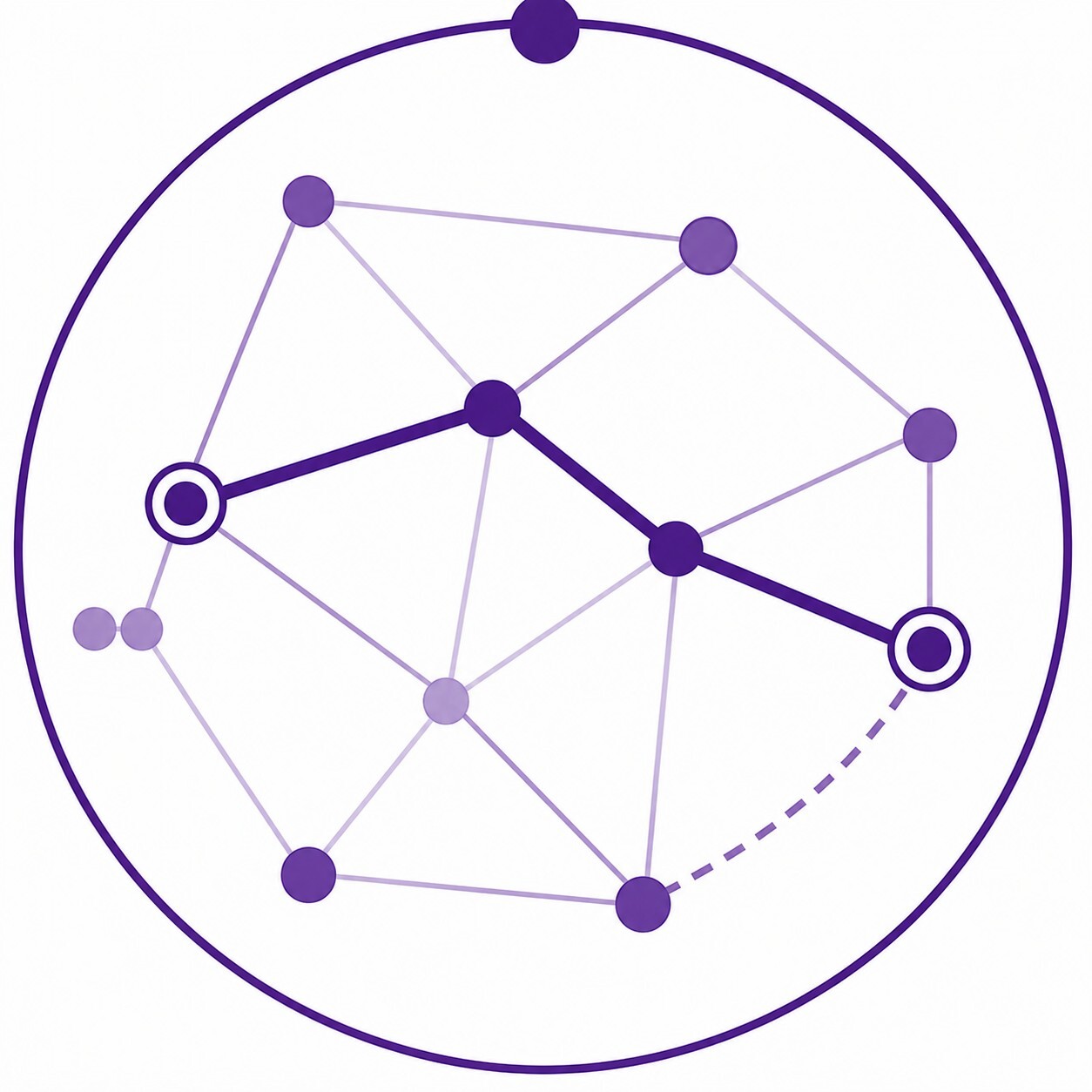
Graph and network optimization algorithms address problems such as finding shortest paths, maximum flows, and minimum spanning trees in networks modeled as graphs. Applications of graph algorithms span routing, scheduling, matching and assignment problems, clustering, and connectivity problems, which are crucial in domains like transportation, communication networks, and logistics. Key challenges include efficiently handling large-scale graphs, managing dynamic updates, and balancing efficiency with accuracy. The techniques used range from combinatorial and continuous optimization to linear programming and approximation algorithms.
INSAIT researchers in this area
- Bernhard Haeupler
- Bundit Laekhanukit
- Zhijun Zhang
- Lazar Milenkovic
Former researchers and visitors
- Robert Tarjan
- Thatchaphol Saranurak
- Slobodan Mitrovic
- Václav Rozhoň
- Nick Fischer
- Yonggang Jiang
- Antti Roeyskoe
Selected Publications
- Deterministic Negative-Weight Shortest Paths in Nearly Linear Time via Path Covers
Bernhard Haeupler, Yonggang Jiang, Thatchaphol Saranurak
STOC 2026: ACM Symposium on Theory of Computing - Dynamic Construction of the Lovász Local Lemma
Bernhard Haeupler, Slobodan Mitrović, Srikkanth Ramachandran, Wen-Horng Sheu, Robert Tarjan - DAG Projections: Reducing Distance and Flow Problems to DAGs
Bernhard Haeupler, Yonggang Jiang, Thatchaphol Saranurak
STOC 2026: ACM Symposium on Theory of Computing - Parallel (1+epsilon)-Approximate Multi-Commodity Mincost Flow in Almost Optimal Depth and Work
Bernhard Haeupler, Yonggang Jiang, Yaowei Long, Thatchaphol Saranurak, Shengzhe Wang
FOCS 2025: IEEE Symposium on Foundations of Computer Science
Network and Graph Structures
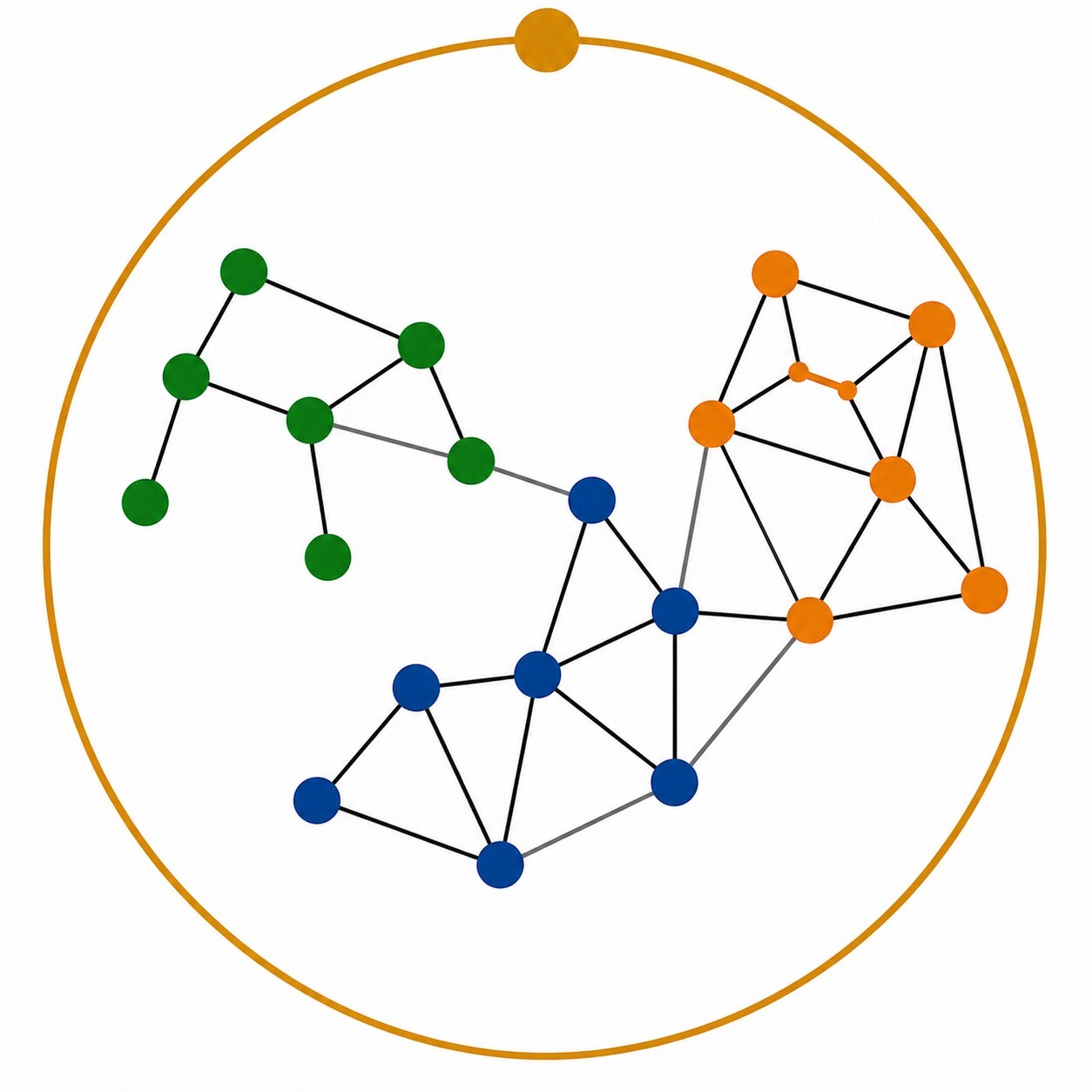
Network and graph structures such as expanders, graph decompositions, spanners, and sparsifiers are powerful tools in computer science and mathematics, used to simplify and analyze complex networks. Expanders are highly connected sparse graphs, important in network optimization algorithms, network design, and derandomization. Spanners and sparsifiers approximate and simplify the structure of a graph while preserving essential properties, aiding, for example, in speeding up algorithms for large-scale networks. The study of network and graph structures has applications in optimization, approximation algorithms, communication networks, and the design and operation of large-scale data centers.
INSAIT researchers in this area
- Lazar Milenkovic
- Zhijun Zhang
- Bundit Laekhanukit
- Bernhard Haeupler
Former researchers and visitors
- Thatchaphol Saranurak
- Yaowei Long
- Antti Roeyskoe
Selected Publications
- Better Diameter Bounds for Efficient Shortcuts and a Structural Criterion for Constructiveness
Bernhard Haeupler, Antti Roeyskoe, Zhijun Zhang
ICALP 2026: EATCS International Colloquium on Automata, Languages, and Programming - Reviving Thorup's Shortcut Conjecture
Aaron Bernstein, Henry Fleischmann, Maximilian Probst Gutenberg, Bernhard Haeupler, Gary Hoppenworth, Yonggang Jiang, George Z. Li, Seth Pettie, Thatchaphol Saranurak, Leon Schiller
STOC 2026: ACM Symposium on Theory of Computing - Polynomial Integrality Gap of Flow LP for Directed Steiner Tree
Shi Li, Bundit Laekhanukit
TALG 2025: ACM Transactions on Algorithms - A Constant-Approximation Distance Labeling Scheme under Polynomially Many Edge Failures
Bernhard Haeupler, Yaowei Long, Antti Roeyskoe, Thatchaphol Saranurak
STOC 2026: ACM Symposium on Theory of Computing
Beyond-Worst-Case Complexity and Universal Optimality
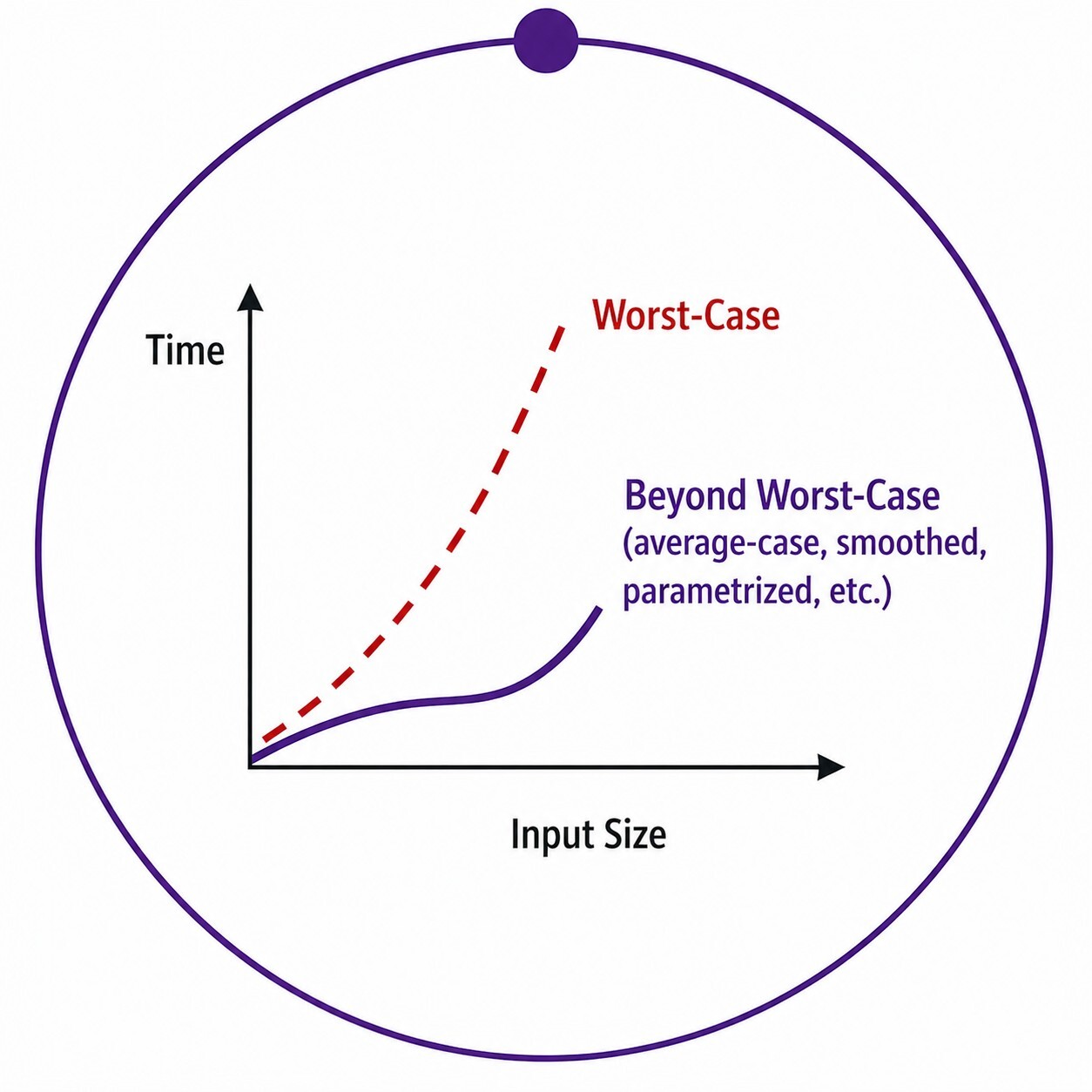
Beyond-worst-case complexity aims to refine traditional worst-case complexity analyses by considering more realistic settings and inputs. It explores average-case complexity, instance-specific guarantees, smoothed analysis, and parameterized complexity, providing a more nuanced understanding of how fast and well individual computational tasks can be solved. This approach is particularly useful for explaining the practical efficiency of algorithms that perform well on most inputs, even if their worst-case complexity is high. The framework helps bridge the gap between theoretical bounds and real-world performance.
INSAIT researchers in this area
- Zhijun Zhang
- Bernhard Haeupler
Former researchers, visitors, and collaborators
- Robert Tarjan
- Václav Rozhoň
- Jakub Tětek
- Shyan Akmal
- Richard Hladík
Selected Publications
- Universal Optimality of Dijkstra via Beyond-Worst-Case Heaps
Bernhard Haeupler, Richard Hladik, Vaclav Rozhon, Robert Tarjan, Jakub Tetek
FOCS 2024: IEEE Symposium on Foundations of Computer Science
FOCS'24 Best Paper Award - Universally Optimal Streaming Algorithm for Random Walks in Dense Graphs
Klim Efremenko, Gillat Kol, Raghuvansh R. Saxena, Zhijun Zhang
ITCS 2026: Innovations in Theoretical Computer Science Conference - Near-Universally-Optimal Differentially Private Minimum Spanning Trees
Richard Hladík, Jakub Tětek
FORC 2026: Symposium on Foundations of Responsible Computing
Best Student Paper Award - Fast and Simple Sorting Using Partial Information
Bernhard Haeupler, Richard Hladík, John Iacono, Vaclav Rozhon, Robert Tarjan, Jakub Tětek
SODA 2025: ACM-SIAM Symposium on Discrete Algorithms
Computational Geometry
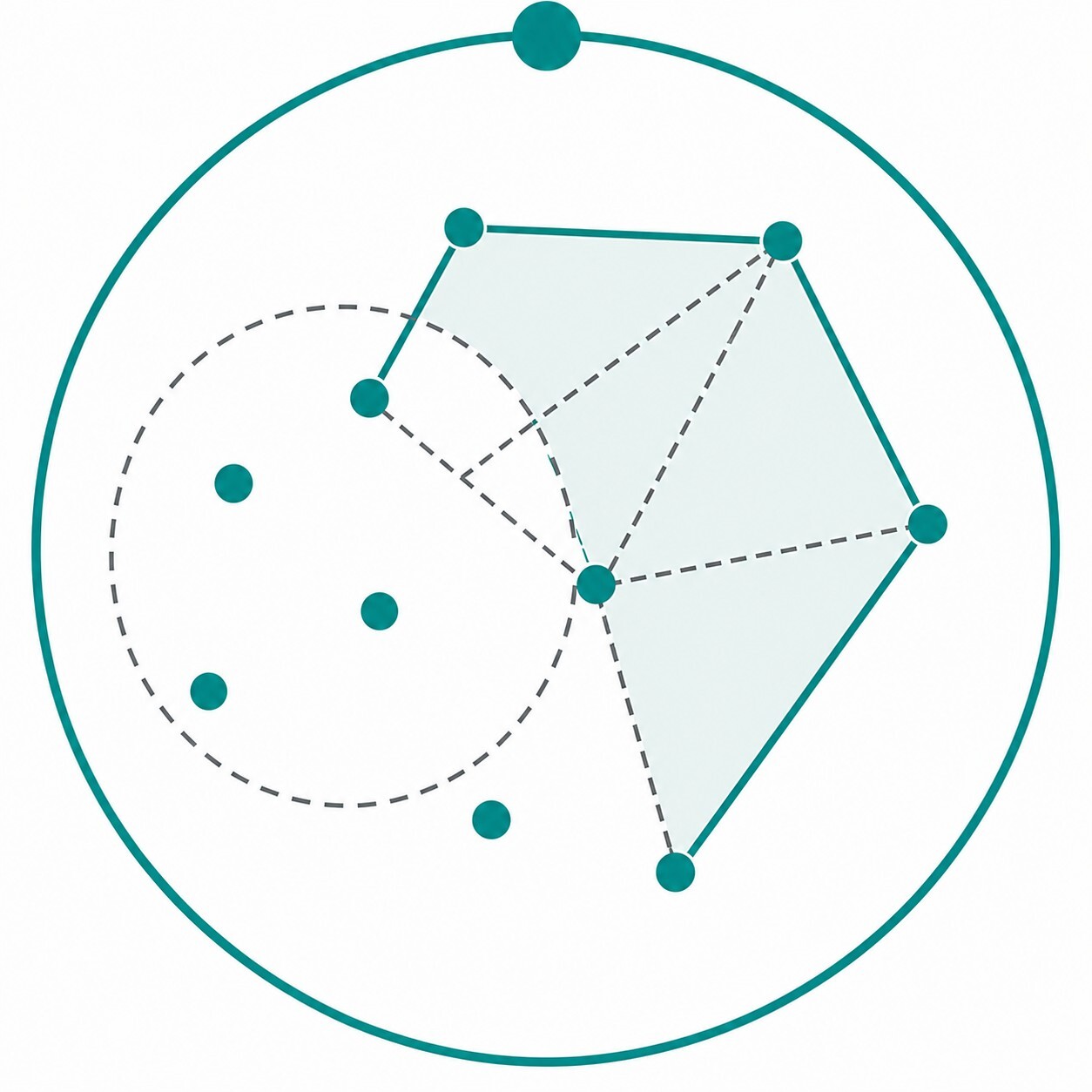
Computational geometry studies algorithms for processing and analyzing geometric data, including points, lines, polygons, meshes, and higher-dimensional shapes. It addresses fundamental problems such as nearest-neighbor search, convex hulls, geometric intersection detection, motion planning, and spatial partitioning, with applications in computer graphics, robotics, computer vision, geographic information systems, CAD, and scientific computing. Key challenges in the field include handling high-dimensional data, designing algorithms that are both theoretically efficient and robust to noise and numerical imprecision, and scaling to massive geometric datasets. By combining combinatorial insight with algebraic and geometric techniques, computational geometry provides essential tools for reasoning about space, shape, and structure in modern computational systems.
INSAIT researchers in this area
- Lazar Milenkovic
Selected Publications
- Tree-Like Shortcuttings of Trees
Hung Le, Lazar Milenković, Shay Solomon, Cuong Than
SoCG 2026: International Symposium on Computational Geometry - Euclidean Noncrossing Steiner Spanners of Nearly Optimal Sparsity
Sujoy Bhore, Sándor Kisfaludi-Bak, Lazar Milenković, Csaba D. Tóth, Karol Węgrzycki, Sampson Wong
SoCG 2026: International Symposium on Computational Geometry
Parallel and Distributed Computing
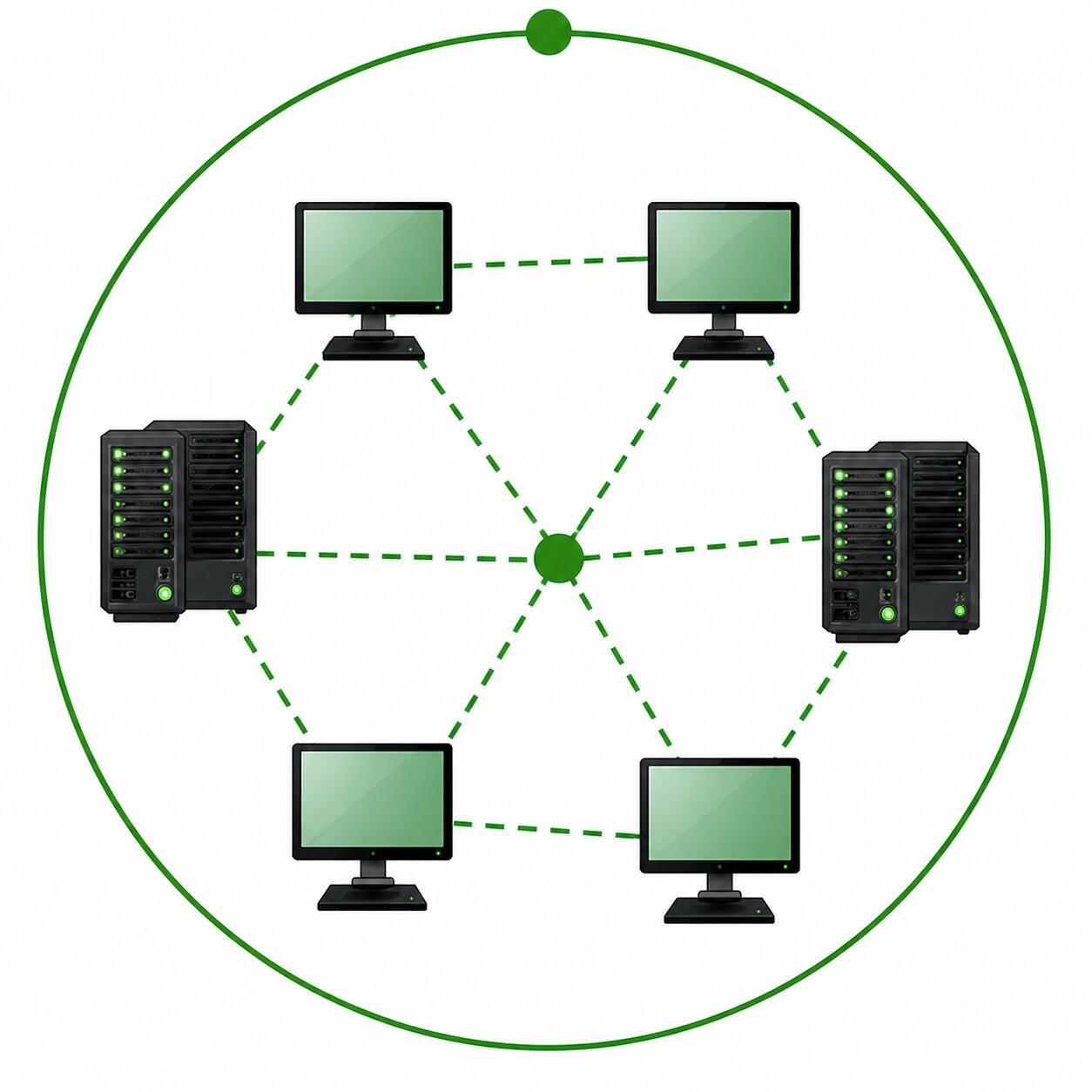
The theory of distributed computing explores how multiple computing entities, or nodes, collaborate to solve problems, often in an asynchronous, unreliable, or adversarial environment. It addresses key questions about coordination, communication, and symmetry breaking, while considering constraints like limited memory and communication, distributed storage of data, communication bottlenecks, and the role of randomization. This field plays a vital role in designing systems that are scalable, robust, and efficient, such as cloud infrastructure, computations in large data centers or distributed settings like blockchains.
Parallel algorithms are designed to exploit multiple processors or cores to solve problems faster by dividing tasks into independent subtasks. Theoretical research in this area involves creating algorithms that minimize communication, synchronization, and redundant work while maximizing parallel efficiency. It considers computational models like PRAM, Parallel Random Access Machine, and MPC, Massively Parallel Computations, and focuses on problems like connectivity, transitive closure, parallel shortest paths computations, clusterings, and graph traversal. Parallelism is crucial for handling big data in modern systems.
INSAIT researchers in this area
- Bernhard Haeupler
- Lazar Milenkovic
- Zhijun Zhang
Former researchers and visitors
- Seri Khoury
- Václav Rozhoň
- Nick Fischer
- Yaowei Long
Selected Publications
- Breaking Barriers for Distributed MIS by Faster Degree Reduction
Seri Khoury, Aaron Schild
STOC 2026: ACM Symposium on Theory of Computing - A Simple Parallel Algorithm with Near-Linear Work for Negative-Weight Single-Source Shortest Paths
Nick Fischer, Bernhard Haeupler, Rustam Latypov, Antti Roeyskoe and Aurelio Sulser
SOSA 2025: SIAM Symposium on Simplicity in Algorithms - Round Elimination via Self-Reduction: Closing Gaps for Distributed Maximal Matching
Seri Khoury, Aaron Schild
FOCS 2025: IEEE Symposium on Foundations of Computer Science
Complexity Theory
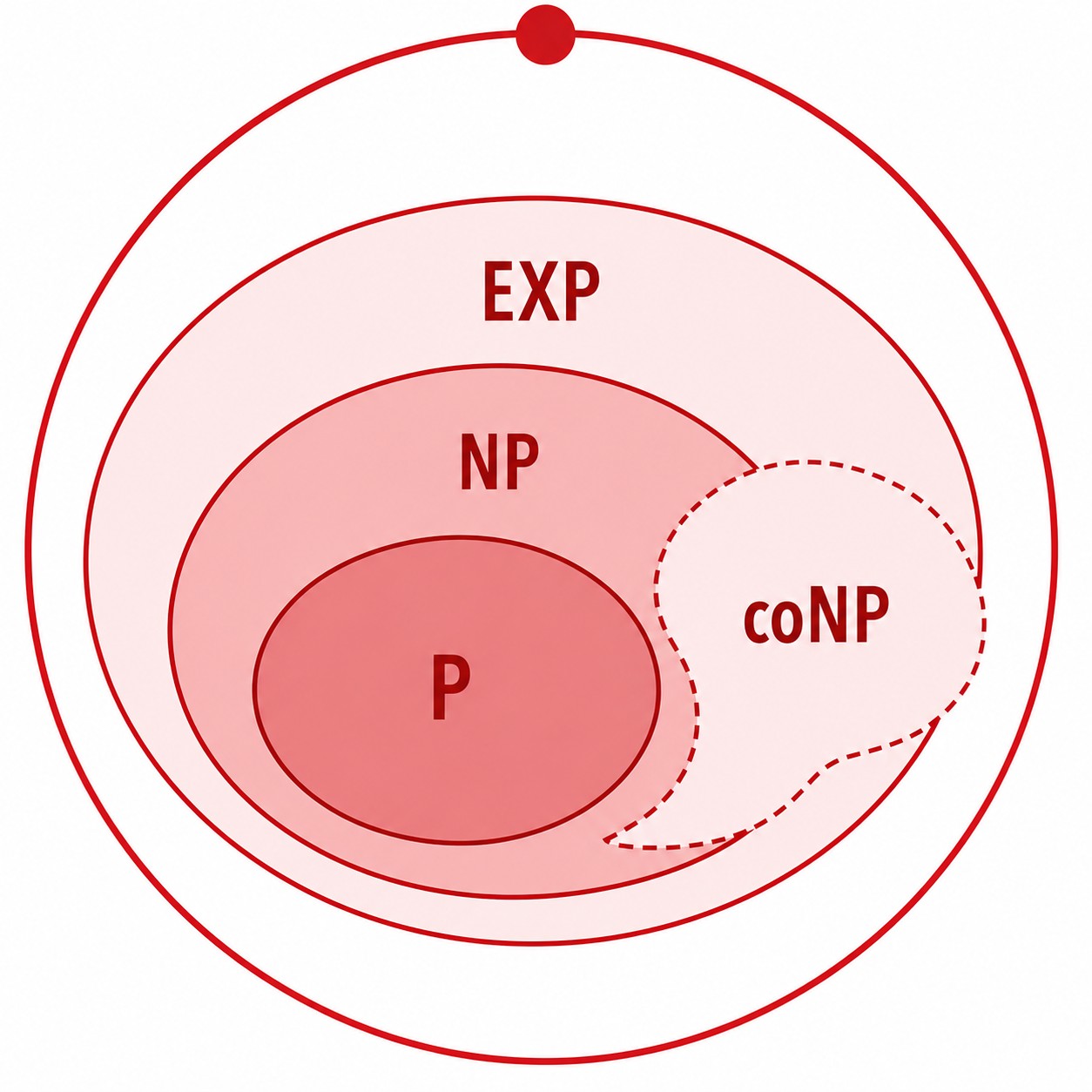
Computational complexity and communication complexity study the fundamental limits of efficient computation. Computational complexity focuses on classifying problems according to the resources—such as time, memory, or randomness—required to solve them, and seeks to understand which problems can be solved efficiently and which are inherently hard. Communication complexity, on the other hand, examines the amount of information exchange needed between multiple parties to jointly compute a function when the input is distributed among them. Together, these areas provide powerful frameworks for proving lower bounds, guiding algorithm design, and understanding the intrinsic difficulty of problems across computer science, with applications ranging from data structures and streaming algorithms to distributed computing, cryptography, and optimization.
INSAIT researchers in this area
- Zhijun Zhang
- Bundit Laekhanukit
Former researchers and visitors
- Karthik C.S.
- Shyan Akmal
- Mursalin Habib
Selected Publications
- White-Box Adversarial Streaming Lower Bounds beyond Two-Party Communication
Klim Efremenko, Gillat Kol, Raghuvansh Saxena, Zhijun Zhang
ICALP 2026: EATCS International Colloquium on Automata, Languages, and Programming - Constant Rate Isometric Embeddings of Hamming Metric into Edit Metric
Sudatta Bhattacharya, Sanjana Dey, Elazar Goldenberg, Mursalin Habib, Bernhard Haeupler, Karthik C. S., Michal Koucký
ICALP 2026: EATCS International Colloquium on Automata, Languages, and Programming - Graph Coloring Below Guarantees via Co-Triangle Packing
Shyan Akmal, Tomohiro Koana
ISAAC 2025: International Symposium on Algorithms and Computation - Better Diameter Bounds for Efficient Shortcuts and a Structural Criterion for Constructiveness
Bernhard Haeupler, Antti Roeyskoe, Zhijun Zhang
ICALP 2026: EATCS International Colloquium on Automata, Languages, and Programming